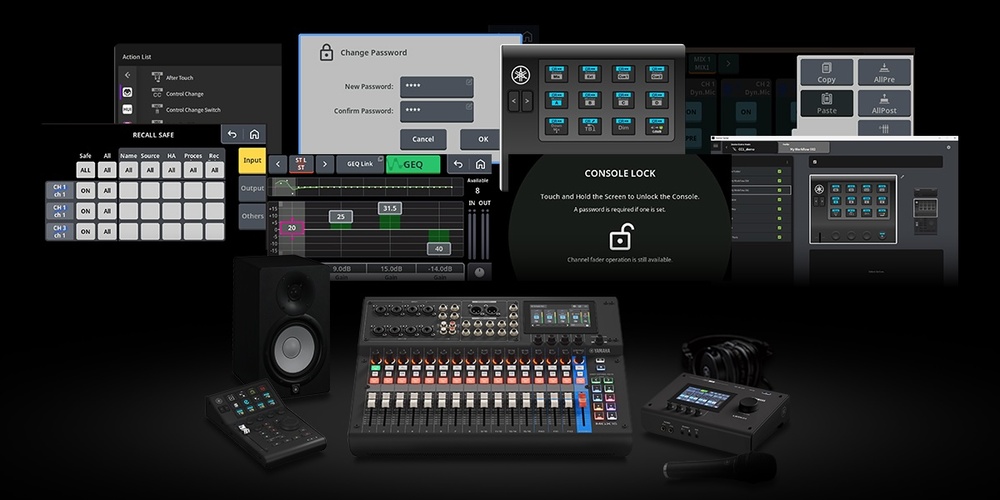
The home studio and streaming gear market has long been fragmented — mixers, audio interfaces, and DAW controllers that barely talk to each other, forcing you to patch together a workflow from three separate ecosystems. That changes now. Yamaha just updated its MGX, URX and CC1 lineup with a sweeping round of free firmware upgrades, and the verdict is refreshingly simple: this is the most cohesive the platform has ever been. It’s not flashy. But it’s genuinely useful.
What Got Updated — and What Actually Matters
These aren’t cosmetic tweaks. Here’s the quick breakdown of what landed in the November 2026 update:
| Device | Key New Features |
|---|---|
| MGX Mixer | FLEX12GEQ on stereo/mix buses, GEQ Link, Recall Safe, Console Lock, improved scene management |
| URX Audio Interface | FLEX12GEQ support, default settings ready on power-on, TOUCH AND TURN knob handles headphone + main volume |
| CC1 DAW Controller | ControlCenter 2.0, 7 MIDI message types (Pitch Bend, Aftertouch), plugin profile editor, deeper Cubase/Nuendo integration |
| All Devices | Basic FX Suite V4.0 — onboard effects now usable as VST, AU and AAX plugins inside your DAW |
That last one is quietly the biggest win. Your onboard reverb and compression — the stuff built into the hardware — can now run as proper plugins inside whatever DAW you’re using. That’s real value.
What Yamaha Isn’t Telling You
Read the press release and everything sounds perfect. Here’s what to watch for in the real world.
The FLEX12GEQ on the MGX and URX only works at 44.1 kHz or 48 kHz sample rates. Working at higher sample rates? The EQ simply won’t appear. That’s a limitation Yamaha buried in the small print — and it matters if your sessions run at 96 kHz.
The CC1’s new MIDI Control function is powerful, but it currently excludes System Messages. For most streamers and bedroom producers that won’t matter. For anyone running complex live setups that rely on MIDI clock or transport sync, it’s a gap worth knowing about before you rebuild your rig around it.
There’s also no mention of latency improvements — something that matters enormously if you’re using the URX as your primary audio interface for real-time monitoring while tracking vocals or guitar.
How Does It Stack Up Against the Competition?
If you’re already running a Focusrite Scarlett or a RØDECaster Pro setup, this won’t pull you away. Those ecosystems are mature, with strong communities and deep software integration baked in from day one.
But if you’re still on a basic USB interface from five years ago with a pile of unconnected gear — this is exactly the upgrade you’ve been waiting for. The fact that the MGX, URX and CC1 now genuinely communicate as one system, with shared EQ settings, scene management, and plugin pass-through, puts Yamaha firmly ahead of anything else at this price point in the streaming and content creation space.
Think of it this way: Yamaha now has a coherent ecosystem. Most competitors at this level still don’t. That matters more than any single spec on a comparison chart. It also pairs naturally with the kind of studio monitoring setup covered in our best budget studio monitors guide — a complete chain worth considering together.
Who Should Actually Buy This?
✅ Buy This If You Are…
- A streamer or content creator who needs a tightly integrated hardware-software chain
- A bedroom producer upgrading from a basic 2-in/2-out interface and wanting real mixing power
- A live performer or small venue engineer who needs scene recall and console lock
- A Cubase or Nuendo user — the DAW integration improvements are significant
- Someone who wants their onboard effects as proper DAW plugins at no extra cost
❌ Skip This If You…
- Already own a RØDECaster Pro II or Focusrite Clarett and have no complaints
- Work exclusively at 96 kHz or above and need the FLEX12GEQ on output buses
- Rely on MIDI System Messages for complex live rig sync
- Use Pro Tools as your primary DAW and don’t touch Cubase or Nuendo
- Need a hardware-only solution — the best features here require the companion software
One More Thing Worth Knowing
All of these updates are free. If you already own the MGX, URX or CC1, you download the firmware from Yamaha’s support page and you’re done. No subscription. No upsell. That’s the kind of manufacturer support that actually earns loyalty.
More additions are already confirmed for early 2027, including Channel Copy for the MGX and URX series. Worth keeping an eye on — especially if you’re deciding whether to build your studio around this ecosystem now. For a broader picture of what pairs well with gear like this, check out our best audio interfaces guide and our best MIDI controller roundup for context on where the CC1 fits in the wider market.
Bottom line: Yamaha just updated its MGX, URX and CC1 in a way that finally makes the whole ecosystem feel like it was designed together — because now it actually works that way. Free updates that meaningfully expand what your gear can do are rare. This is one of those times. The question is whether this ecosystem fits your specific workflow. So — does the Yamaha MGX, URX and CC1 system look like the right setup for your studio, or is there a gap in the feature set that’s holding you back? Drop your thoughts in the comments.
🔗 Download the official Yamaha MGX, URX and CC1 firmware updates here →