For years, producers have lived inside a frustrating trade-off. Algorithmic reverbs are fast and flexible — but they can sound synthetic. Convolution reverbs feel real, but they’re static, CPU-hungry, and about as exciting as a spreadsheet. Neither type truly disappears into the music.
Enter the Waves Atlas Reverb, released July 27, 2026. It’s Waves’ newest flagship reverb plugin, and it’s built around one mission: create space that feels emotional — not space that just technically “is” reverb. The company spent thousands of hours tuning every single preset by ear, not by math. Multi-Grammy producer Greg Wells put it simply: “No other reverb plugin does what this does.”
⚡ OUR QUICK VERDICT
At $99.99 intro (normal price $149), the Waves Atlas Reverb is a serious reverb for producers and mix engineers who want musical depth — not parameter rabbit holes. It’s not perfect, it’s not for everyone, and there are things Waves isn’t telling you. But it may genuinely be the best all-in-one algorithmic reverb Waves has ever shipped. Read on.
📋 Waves Atlas Reverb: At a Glance
Here’s everything on the spec sheet — condensed so you can make a fast decision.
| Feature | What You Need to Know |
|---|---|
| Engine | All-new, fully algorithmic — zero convolution, zero impulse responses |
| Presets | 100+ reverb programs, every single one tuned by ear from scratch |
| Space Types | Halls, Rooms, Chambers, Plates, Springs, Signature Halls, Dreamscapes, Gated, classic 80s |
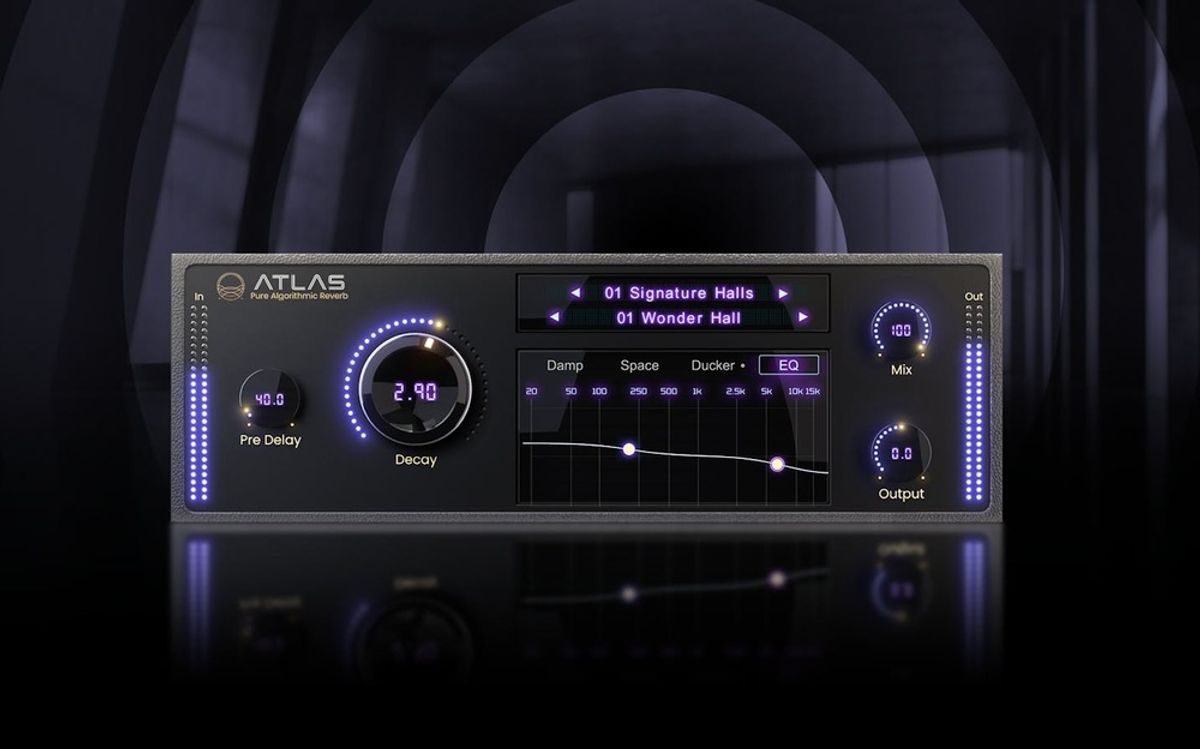
| Controls | 6 streamlined musical controls + Ducker + Post EQ |
| Dynamic Detection | Yes — the reverb responds differently depending on your source material |
| Latency | Low-latency architecture (studio & live use) |
| CPU Load | Low — designed for large sessions and live rigs |
| Formats | VST3, AU, AAX, NKS, AudioSuite, SoundGrid |
| OS | macOS 14+ / Windows 10+ |
| Price | $99.99 introductory (full price: $149) |
| Bundle Access | Included in Waves Ultimate, Mercury, Pro Show, SD7 Pro Show |
🎚️ What Actually Makes Atlas Different?
The Engine: Algorithmic Done Right
Most reverb plugins on the market use convolution — they capture the “impulse response” of a real room and replay it. It sounds great in solo. The problem? That captured room doesn’t move. It doesn’t breathe. It doesn’t respond to your kick drum differently than it responds to your lead vocal. It just sits there, doing its thing, whether your track needs it or not.
Atlas throws all of that out. It’s a pure algorithmic engine — meaning it generates reflections entirely in real-time, in code. Waves’ product manager Shai Mantzur explained the philosophy directly: “With Atlas, we weren’t just chasing the sound of a room. We wanted its behavior — reflections that move and modulate as the music moves.” That’s a big statement. Whether it delivers is the real question.
The early signals from professionals are compelling. Mix engineer Chuck Zwicky, who spent years working with Prince, consulted on Atlas as a program designer. He noted the unusual approach of tuning everything by ear rather than by spec measurements — the same way the legendary Lexicons and EMTs of the ’70s and ’80s were built. That human-tuning process, applied to a modern algorithm, is what makes Atlas worth paying attention to.
The Interface: Musical, Not Technical
Here’s where Waves made a smart call. A lot of reverb plugins bury you in parameters — pre-delay, early reflections, diffusion, tail length, frequency-dependent decay, modulation rate… the list goes on. Engineers love that power. But most working producers just want something that sounds great right now.
Atlas gives you six controls. Six. Behind those controls is a deep algorithmic architecture doing all the heavy lifting — the complex parameters run automatically under the hood. You get the musical decisions (how long, how wet, how bright, how it ducks behind your track), and Atlas handles the engineering. If you’re building out your home studio plugin toolkit, this kind of streamlined workflow matters enormously.
The program-browsing workflow deserves a mention too. Atlas is designed so you can flip through completely different spaces while your track is playing. No exporting, no clicking out of the DAW, no context switching. You hear the reverb in the mix — which is exactly where it matters.
The Programs: Over 100 — But Are They Good?
One hundred-plus programs is a lot. The library spans traditional spaces (Halls, Rooms, Chambers, Plates, Springs), imagined spaces (Signature Halls, Dreamscapes), classic hardware-inspired sounds (gated reverbs, large 80s textures), and Waves’ own take on the legendary DSP reverb sounds that shaped hit records for decades. Every single one went through what Waves describes as hundreds of hours of listening and refinement — tuned not to sound impressive alone, but to work inside a real track.
If you’re a producer working across vocals, drums, guitars, and synths, that range matters. You need a plate that works for snare. You need a hall that doesn’t swamp your vocal. You need something unusual for your synth pads that doesn’t sound like every other plugin. Atlas is positioned to handle all of it from a single interface. Monitoring those decisions properly matters too — it’s worth pairing Atlas with a pair of accurate studio headphones to hear every nuance of the tail.
🤔 What Waves Isn’t Telling You
Let’s be straight — every plugin launch is a marketing event. Here’s what the press release glosses over.
🔵 The macOS 14 Requirement
Atlas requires macOS 14 or later, and Windows 10 or later. If you’re still running macOS 12 or 13 — maybe on an older Mac Pro or MacBook you haven’t upgraded — you can’t use this plugin. Full stop. That’s a real-world snag Waves buries in the fine print.
🔵 Zero Independent Reviews Yet
Released days ago, Atlas has no independent hands-on reviews. No YouTube teardowns. No A/B shootouts. The early praise is entirely from professionals who were given pre-release access — and whose quotes appear in the Waves press materials. That doesn’t mean they’re wrong, but it’s not the same as six months of community feedback.
🔵 The Waves Sale Cycle Is Real
Waves is legendary for aggressive discounting. The “regular” price of $149 may never be what you actually pay. The introductory price of $99.99 is strong — but if history is any guide, Atlas will appear in a Waves sale for $29.99–$49.99 within a year. If you’re not in a rush, patience could save you $50–$70.
🔵 “100+ Programs” Needs Scrutiny
A hundred presets sounds enormous. But how many are truly unique algorithms vs. subtle variations on the same core reverb? No third-party has yet peeled back the hood to tell us. A plugin with 100 genuinely different spaces is a powerhouse. One with 20 great algorithms and 80 subtle tweaks is still good — but it’s a different product. We’ll update this review as more info surfaces.
⚔️ Atlas Reverb vs. The Competition
Waves wants you to see Atlas as a category-defining reverb. Let’s reality-check that against the plugins you probably already own or are considering.
Atlas vs. Valhalla Room ($50)
Valhalla Room is probably the most beloved algorithmic reverb in existence at any price point — and it costs half of what Atlas does at intro pricing. If you’re still on Valhalla and your mixes sound great, Atlas won’t change your life. But if you’ve maxed out Valhalla’s relatively compact library and you want a dramatically wider palette — different program philosophies, dynamic detection, and a browsing-first workflow — Atlas is a serious upgrade worth exploring. Think of it this way: Valhalla is a Swiss Army knife. Atlas is a full kitchen knife block. You might not need every blade, but the one you need is always there.
While you’re building your reverb toolkit, our guide to the best reverb pedals for guitar is worth a read — understanding hardware reverb character helps you evaluate whether any software reverb truly captures that feel.
Atlas vs. FabFilter Pro-R 2 (~$200)
Pro-R 2 is the engineer’s reverb — deep, precise, and parametrically powerful. If you want surgical control over every aspect of the reverb tail, Pro-R 2 still wins. But if you want to feel a reverb rather than engineer it, Atlas is the more intuitive tool. Atlas trades technical depth for musical speed. Neither is better — they serve different workflows. If you already own Pro-R 2, you probably don’t need Atlas. If you don’t own either yet and you’re mixing pop, R&B, or country, Atlas may be the smarter starting point.
Atlas vs. Eventide Blackhole ($149)
Blackhole is a creative reverb — it’s designed to mangle sound, create atmosphere, and take you somewhere that doesn’t exist in the real world. Atlas isn’t that. Atlas is a practical, mix-ready reverb designed to sound like a record. If you need wild atmospheric effects for ambient music or film scoring, Blackhole stays the pick. If you need a reverb that makes your session sound finished, Atlas is built for that job.
🛒 Who Should Actually Buy Waves Atlas Reverb?
Stop reading spec sheets. Here’s the only question that matters: does this belong in your session?
✅ BUY IT IF…
- You’re a bedroom producer who wants professional-quality reverb without a 45-minute deep dive into parameters
- You mix vocals, pop, country, R&B, or anything where reverb needs to feel “live” inside the track
- You’re a live sound engineer — the low CPU and low-latency design are purpose-built for demanding live rigs
- You already have a Waves Ultimate subscription — Atlas is included, so it costs you nothing extra
- You’re running Valhalla Room and want a bigger, more varied library with dynamic response to source material
- You work on full mix sessions where reverb needs to survive a dense arrangement, not just sound great in solo
- You want a go-to everyday reverb that works on drums, guitars, synths, and vocals from a single plugin
❌ SKIP IT IF…
- You already own FabFilter Pro-R 2 — you already have more technical power than Atlas offers
- You’re on a tight budget and Valhalla Room at $50 already covers 90% of your reverb needs
- You need creative/atmospheric reverbs for film scoring or ambient music — Eventide Blackhole is still the king of that territory
- You’re running macOS 13 or older — Atlas won’t install at all
- You have the patience to wait for a Waves sale — the price will almost certainly drop significantly within 12 months
- You’re primarily a hardware reverb purist who uses outboard gear — a software plugin isn’t going to change your workflow
💡 Pro Tip: Getting the Most Out of Atlas
Atlas is built for browsing while your track plays — so lean into that workflow. Load it on a send channel (not directly on a track), set a 15–20% wet mix on the send, and then flip through programs with your track looping. You’ll hear instantly what works. Don’t tweak the six controls until you’ve found the right space first. The right room is 80% of the battle; the controls are just polish. To get the most accurate picture of what Atlas is doing, make sure your audio interface is performing cleanly — check our guide to top audio interfaces for your DAW if your monitoring chain needs an upgrade.
🏆 Final Verdict: Is Waves Atlas Reverb Worth It?
The Waves Atlas Reverb arrives as arguably the most ambitious reverb plugin Waves has ever released. The all-new algorithmic engine, the 100+ ear-tuned programs, the dynamic detection system, the streamlined six-control interface — all of it points to a plugin that was built with a singular philosophy: reverb should feel like part of the music, not something added to it.
Is it a “game changer”? That depends entirely on your starting point. If you’re a Waves Ultimate subscriber, you already own it — load it up today. If you’re a working mix engineer who relies on reverb daily and doesn’t own FabFilter Pro-R 2, $99.99 is genuinely fair for what Atlas delivers. If you’re on a tight budget or already have a stacked reverb toolkit, wait for a sale or skip it entirely — it won’t leave a hole in your workflow.
What’s undeniable is that Waves built this one differently. Tuned by ear. Tested inside real records. Designed by people who genuinely love how music sounds. Whether you buy it now or in six months at half the price, the Waves Atlas Reverb belongs on your radar.
Ready to Hear It For Yourself?
Waves is offering Atlas Reverb at an introductory price of $99.99 — down from the regular $149. The intro price won’t last forever.
💬 What’s Your Take?
Does the Waves Atlas Reverb look like the go-to everyday reverb your sessions have been missing — or is $99 still too steep when Valhalla Room exists at $50? Does the “tuned by ear” philosophy actually matter to you, or is it just great marketing copy? Drop your honest take in the comments below. Especially if you’ve already had your hands on it.
📚 Keep Building Your Studio Toolkit
- Pro Recording Studio Equipment Checklist: The Essentials — build the perfect plugin and hardware foundation
- 10 Best Studio Headphones for Music Production (2026) — hear every detail of your reverb tails
- 10 Best Reverb Pedals for Guitar — 2026 Top Picks — understand the hardware reverb character that Atlas draws on
- Top Audio Interfaces for Your DAW (2026) — the chain starts before any plugin
Prices and availability correct as of July 2026. Studio Gear Experts may earn a commission on qualifying purchases at no extra cost to you.