Sound designers have always craved something genuinely raw — textures that feel like they’ve been through a life, not a sample pack algorithm. Tape-based tools exist, but most feel either too polished or too gimmicky. Now, Soniccouture’s Scanner: Library has arrived. And it’s the real thing. Built from 40 years of personal recordings by electronic music pioneer Robin Rimbaud — known to the world as Scanner — this instrument doesn’t sound like anything else in your plugin folder. Full stop.
What Is Scanner: Library, Exactly?
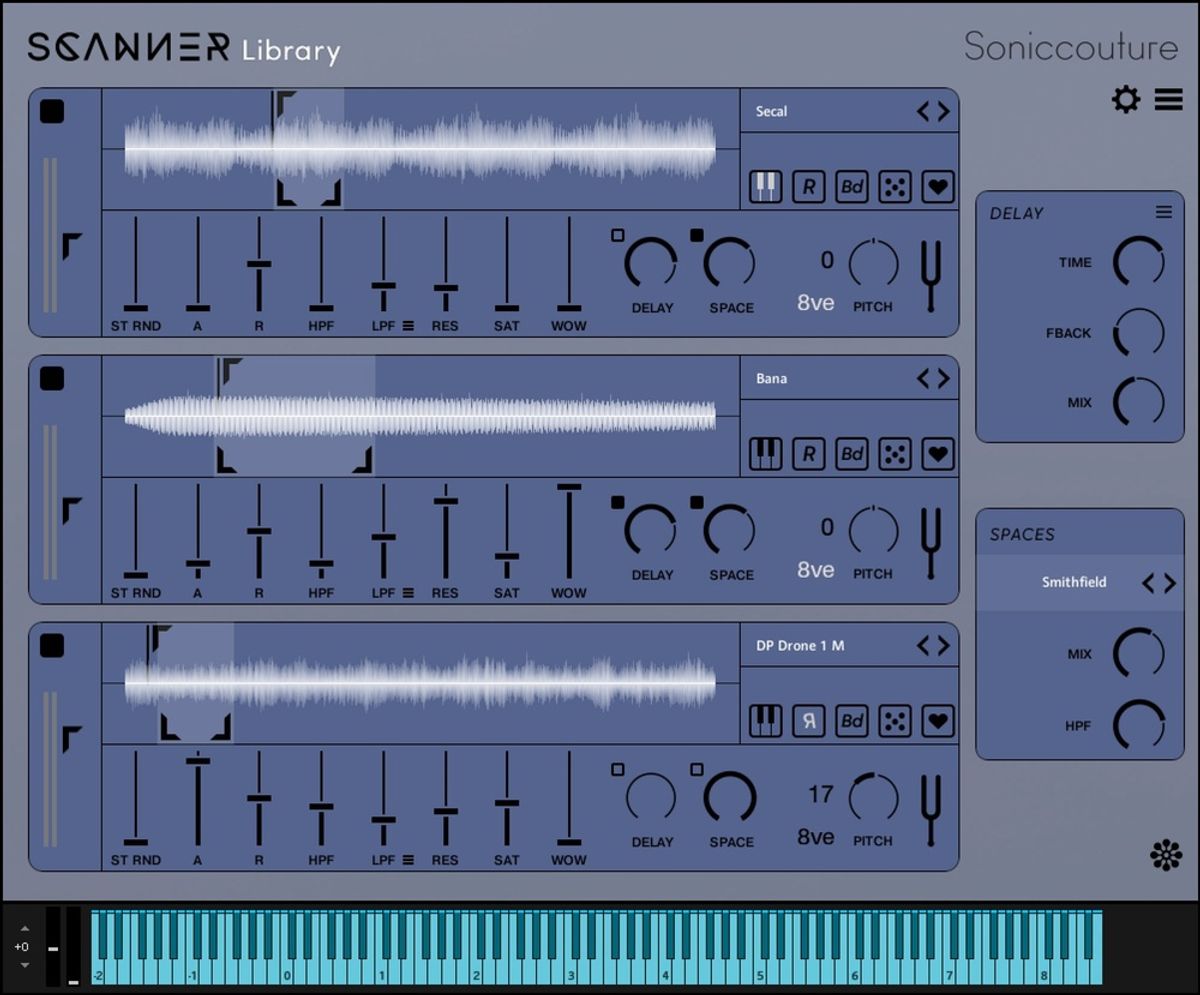
Scanner: Library is a Kontakt Player instrument built around a tape fragment sampler engine. Soniccouture and Robin Rimbaud co-designed it as a framework for layering and transforming archival sounds into something new. Think of it as a creative instrument, not a sound effect library.
The core source material? 401 original recordings pulled from Rimbaud’s personal cassette tape archive — police scanner transmissions, field recordings, electronic improvisations, analogue experiments, and what Soniccouture themselves call “all manner of sonic ephemera.” After digitizing, Rimbaud processed everything through a sprawling modular rig including the Make Noise Morphagene, Sherman Filterbank, and Ciat-Lonbarde Cocoquantus 2, adding layers of texture and motion to every fragment.
The Spec Breakdown
| Library Size | 3.5 GB |
| Source Recordings | 401 original tapes by Robin Rimbaud |
| Presets | 200 total (100+ designed by Rimbaud himself) |
| Engine | 3 identical sample modules + delay + custom reverb |
| Playback Modes | Pitched / Fixed / Backdrop (+ Reverse) |
| Combinations | Over 10 million possible 3-sample layering combos |
| User Samples | Yes — drag and drop your own sounds in |
| Platform | Kontakt 7/8 or Kontakt Player 7.10+, NKS compatible |
| System Requirements | macOS 12+ / Windows 10+, 4 GB RAM minimum |
| Price | $149 intro (full price $199, intro ends 30 Nov 2026) |
What the Press Release Doesn’t Tell You
Here’s where it gets interesting — and a little honest. Soniccouture has leaned hard into the “minimalist design philosophy” angle. Three modules. Basic envelopes. Simple filters. The UI “treads lightly.” That’s a conscious choice, and Rimbaud is quoted as saying, “Limitations can offer so many possibilities.” Beautiful sentiment. But it’s also a potential friction point.
If you’re expecting deep modulation routing, multi-stage envelopes, or LFO-per-module control, you won’t find them here. The sophistication lives in the archive — not the engine. That’s a bold bet. It pays off if you love happy accidents. It might frustrate producers who want surgical control over how each fragment evolves over time.
There’s also no standalone version — you need Kontakt Player 7.10 or higher. If you’re running an older version of Kontakt and haven’t updated, that’s a hurdle. Not a dealbreaker, but worth knowing before you click buy. You’ll want a solid laptop for music production that handles Kontakt’s CPU demands without breaking a sweat, especially when layering all three modules.
How Does It Compare to What’s Already Out There?
If you already own something like Native Instruments’ The Mouth or even Spitfire Audio’s LABS series, Scanner: Library doesn’t overlap much. LABS gives you clean, musical building blocks. Scanner: Library gives you chaos with a personality — corroded tape edges, scanner radio bleed-through, improvised electronics from four decades of practice.
The closer comparison is Morphagene-style granular territory — but in plugin form, accessible without the hardware price tag or the learning curve. If you’ve been eyeing ambient and experimental tools like Baby Audio’s HyperWarp or Sonuscore’s The Pulse for atmospheric sound design, Scanner: Library sits in a similar creative lane — but with a completely unique, historically rooted sonic signature that neither of those can replicate.
“Limitations can offer so many possibilities.”
— Robin Rimbaud (Scanner)
Who Should Actually Buy Scanner: Library?
✅ Buy This If…
- You make ambient, experimental, or cinematic music and want textures that feel genuinely lived-in
- You love found-sound aesthetics and generative-style layering
- You’re a film composer or sound designer hunting for non-generic atmosphere beds
- You enjoy happy accidents more than rigid control
- You want to blend your own samples alongside a curated archive — the drag-and-drop import feature is genuinely useful
- You need something DAW-agnostic that runs in Ableton, Logic, Pro Tools, or Reaper without issues
❌ Skip This If…
- You want precise, surgical sound design with deep modulation matrices
- You’re building conventional melodic or harmonic content — this isn’t a synth replacement
- You’re running Kontakt older than version 7.10 and don’t want to update
- You need royalty-free content for commercial sync work (always verify licensing details directly with Soniccouture)
- Your setup is already overloaded with ambient texture tools and you’re not actively using them
The Bottom Line
Most sample libraries give you sounds that have been manufactured for you. Soniccouture’s Scanner: Library gives you something stranger and rarer — sounds that were collected, archived, and processed over an entire career. The 10-million-plus combination possibilities from just three layers aren’t marketing math; they’re a genuinely different way of thinking about texture and composition. At $149 during the intro window, this is a smart pick for any producer who’s serious about pushing their sound design somewhere most plugins can’t reach. Whether you’re building a home studio from scratch or you’re a seasoned engineer looking for that one tool that surprises you, Scanner: Library earns its place in the session.
Does Scanner: Library look like a must-have to you, or does the stripped-back engine leave you wanting more control for the price? Let us know in the comments below.
👉 Get Scanner: Library from Soniccouture — $149 Intro Price (ends 30 November 2026)