


Most “budget studio monitors” under $150 are glorified computer speakers with pretty colored cones. They lie to your ears — and that lie costs you every time you upload a mix that sounds great in your room but falls apart on headphones, car speakers, and phone earbuds.
Here’s the good news: the difference between a bad pair and a genuinely accurate pair isn’t always hundreds of dollars. It’s knowing what to look for — and avoiding the traps that catch most beginners. We compiled frequency response charts, professional lab tests, and community feedback from hundreds of working home studios to find the best affordable studio monitors you can actually trust.
Quick Picks: Best Budget Studio Monitors at a Glance
| Monitor | Best For | Street Price (Pair) | Why Experts Love It |
|---|---|---|---|
| Kali Audio LP-6 V2 | Best Overall / Flat Accuracy | ~$400 | Insane 3D soundstage; near-zero self-noise |
| JBL 305P MkII | Wide Rooms / Cramped Desks | ~$300 | Huge sweet spot borrowed from $1,000+ monitors |
| KRK Rokit 5 Gen 5 | Hip-Hop / EDM / Untreated Rooms | ~$350 | Onboard LCD DSP room correction; tight low-end |
| Yamaha HS5 | Vocal Mixing / Translation Checks | ~$400 | If it sounds good here, it sounds good anywhere |
The “Budget Monitor” Trap Nobody Warns You About
Walk into any music store and you’ll see shelf after shelf of monitors with yellow cones, green cones, and slick branding. They look pro. They’re not — at least not at the lowest price tiers. The problem isn’t build quality; it’s frequency honesty. Consumer-grade speakers are tuned to sound impressive. Studio monitors are tuned to sound accurate. Those two goals are fundamentally at odds with each other.
When you mix on hyped speakers, you compensate for what you think you hear — not what’s actually in the track. The result is a mix that sounds polished in your studio and completely flat everywhere else. This is called poor mix translation, and it’s the single biggest frustration for bedroom producers trying to level up.
The four monitors in this guide solve that problem without demanding a professional studio budget. Whether you’re looking for the best cheap studio monitors under $200 or the best studio monitors on a budget under $400, there’s a real answer here — not a compromise.

The Reviews: What the Pro-Audio Community Actually Agrees On
1. Kali Audio LP-6 V2 — The Undisputed Value King

Kali Audio was founded by ex-JBL engineers who knew exactly where the budget monitor market was failing its customers. Their answer was the LP-6 — a monitor built around the same acoustic science used in professional broadcast studios, priced for bedroom producers.
The V2 matters specifically because it fixed the self-noise problem that plagued the original. That hiss you’d hear between audio playback — gone. What you get instead is a remarkably flat frequency response extending down to 39Hz, which is essentially unheard of at this price point. Most cheap studio monitors can’t even accurately represent bass below 60Hz.
The 3D soundstage — the ability to hear where instruments sit in stereo space — is where the LP-6 V2 genuinely punches above its weight. Engineers who use these describe finally hearing panning decisions they couldn’t detect on previous budget monitors.
Who it’s for: The purist mixing engineer who wants an honest, clinical representation of their mix. Also the best studio monitors for mixing at any skill level where accuracy is the priority.
2. JBL 305P MkII — The Sweet-Spot Champion
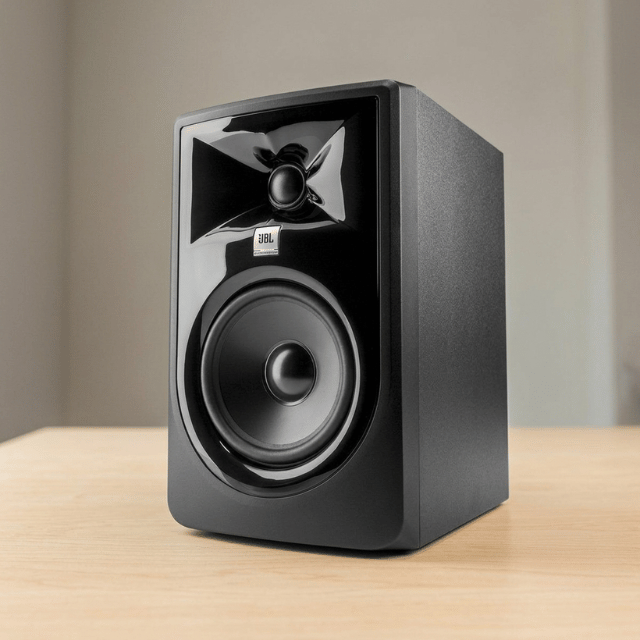
JBL’s 305P MkII carries a feature that most people gloss over in the spec sheet: the waveguide. That sculpted plastic casing around the tweeter isn’t cosmetic — it’s borrowed directly from JBL’s reference monitors that cost over $1,000 a pair. It widens the “sweet spot,” which is the listening position where stereo imaging sounds accurate.
On most budget monitors, the sweet spot is tiny. Move six inches off-center and your stereo field collapses. On the 305P MkII, that sweet spot is dramatically wider — which means if your desk setup is cramped, if you move around while you produce, or if your monitors can’t be perfectly angled, you’re still hearing an accurate stereo image.
The low-end is solid and controlled, making these good cheap studio monitors for producers who work across a range of genres without dedicated bass treatment in their room.
Who it’s for: Beginners and intermediate producers whose home studio setup isn’t acoustically optimized. Excellent affordable studio monitors for home use where room positioning isn’t ideal.
3. KRK Rokit 5 Gen 5 — The Bass Heavyweight for Untreated Rooms
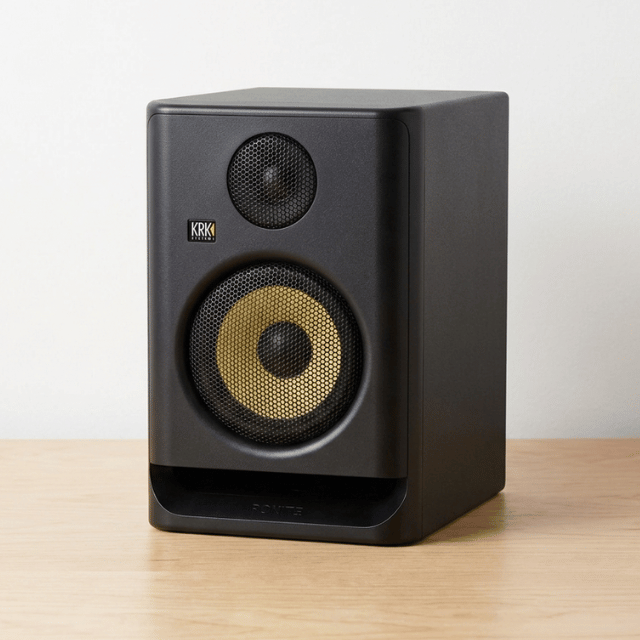
KRK monitors have a reputation in hip-hop and electronic music production circles — one that the Gen 5 has worked hard to both honor and correct. The old stereotype was that Rokit monitors were muddy in the mid-range. The Gen 5 completely overhauled the mid-range response while keeping the punchy, felt-in-your-chest low-end that producers making bass-forward music actually need to hear.
The killer feature is the LCD screen on the back panel. This isn’t gimmickry — it gives you access to built-in DSP EQ that lets you compensate for acoustic problems in your room. Placed too close to a wall? There’s a setting for that. Working in a small untreated bedroom? You can dial in compensation. This makes the Rokit 5 Gen 5 some of the best budget studio monitors for untreated rooms that exist at any price.
Who it’s for: Hip-hop, trap, EDM, and pop producers who need to feel and hear the low-end accurately. Also the best budget studio monitors for music production in spaces with acoustic challenges.
4. Yamaha HS5 — The Brutal Truth Teller

The Yamaha HS5’s white cone is one of the most recognizable symbols in professional audio. It appears in mixing rooms, mastering suites, and broadcast studios worldwide — not because it sounds flattering, but because it doesn’t.
The HS5 is deliberately mid-forward and unforgiving. Low-end is restrained. High-end is honest. What this creates is the ultimate translation tool: a monitor that tells you where your mix is weak before your listeners find out for you. If a vocal sounds balanced on an HS5, it will sound balanced on AirPods, phone speakers, car stereos, and laptop speakers. That is the entire point.
Beginners sometimes find the HS5 discouraging — everything sounds thinner than it “should.” That’s not a flaw. That’s accurate. Once you learn to trust them, your mixes will translate consistently to every playback system in a way that monitors with boosted low-end simply cannot deliver.
Who it’s for: Mid-level producers focused heavily on vocal mixing, acoustic instruments, and mix translation. Also the best budget studio monitors for guitar tracking and acoustic music where mid-range accuracy matters most.
Find Your Perfect Monitor: Interactive Selector
Answer three quick questions and get a personalized recommendation from these four monitors.
🎚️ Which Monitor Is Right for You?
What genre do you mostly produce?
Crucial Buying Advice: What Most Guides Don't Tell You
5-Inch vs. 8-Inch: Bigger Is Not Better in a Bedroom
This is the most common and most expensive mistake beginners make. An 8-inch woofer in a 10×10 foot untreated bedroom creates massive bass buildup at the room's resonant frequencies. You'll hear boomy, exaggerated low-end — which makes you cut bass in your mix — and your mixes end up sounding thin everywhere else.
5-inch monitors are the sweet spot for home studios under 15×15 feet. They produce enough low-end to mix accurately without overwhelming the room. All four monitors in this guide use 5-inch woofers for exactly this reason. Save the 8-inch monitors for genuinely treated medium-to-large rooms.
Active vs. Passive: Every Budget Monitor Is Active
All the best cheap studio monitors in this guide are active (also called powered) monitors. They have amplifiers built in and plug directly into the wall. You do not need a separate power amplifier. If you're shopping in this price range and someone tries to sell you a passive monitor pair that needs an external amp, walk away — you'll spend more on the amp than you saved on the monitors.
Room Acoustics Matter More Than the Monitors
A $400 pair of monitors in an acoustically disastrous room will sound worse than a $200 pair in a treated room. Before upgrading your monitors, consider adding even basic acoustic treatment — corner bass traps and wall panels make a measurable difference. You can learn more about studio setup in our complete recording studio equipment checklist.
Free Upgrades: Make $300 Speakers Sound Like $1,000
The positioning and setup of your monitors matters as much as the monitors themselves. These zero-cost or near-zero-cost adjustments will make a measurable difference in every pair of good budget studio monitors.
The Equilateral Triangle Rule
The distance between your two monitors should be exactly equal to the distance from each monitor to your ears. This creates an equilateral triangle with your head at the apex. The stereo field collapses if this triangle is distorted — no amount of monitor quality compensates for broken positioning.
Tweeter at Ear Level
The tweeter is where high-frequency detail lives. If your monitors sit flat on a desk below ear level, you're mixing off-axis — you're not hearing what the tweeter is actually doing. Raise your monitors with proper stands or, in a pinch, foam yoga blocks work surprisingly well. The tweeter dome should be level with your ears when you're seated at your mix position.
Foam Decoupling Pads
Placing monitors directly on a hollow wooden desk transmits vibrations through the desk surface and creates muddy resonance in the low-mids. Cheap foam isolation pads — sometimes called monitor isolation pads or decoupling pads — absorb this energy and clean up the low-end response dramatically. They cost under $30 and genuinely improve the accuracy of any monitor.

What Else Does Your Studio Need?
Great budget studio monitors are only one piece of the signal chain. For your mixes to translate accurately, the whole chain needs to be honest. A few resources that pair well with this guide:
- Your monitors plug into an audio interface — see our picks for the best audio interfaces for home studios.
- When the room is too loud for monitors, you need accurate headphones — read our guide to the best studio headphones for music production.
- Accurate monitoring only helps if your microphone is capturing your vocals cleanly — check our best vocal microphones under $200 guide.
- And if you haven't settled on a DAW yet, see our breakdown of the best DAW software for music production.
Final Verdict: Which Budget Studio Monitor Should You Buy?
There's no single best answer — but there is a right answer for your situation.
- Need maximum accuracy on a budget? → Kali Audio LP-6 V2. Nothing else at this price comes close for flat, honest monitoring.
- Working in a cramped or imperfect space? → JBL 305P MkII. The wide sweet spot is forgiving of imperfect positioning.
- Producing hip-hop, trap, or EDM in an untreated room? → JBL 305P MkII. The onboard DSP room correction is worth the price alone.
- Focused on vocals and mix translation above all else? → Yamaha HS5. If it sounds good here, it sounds good anywhere — that's not marketing copy, it's engineering truth.
Any of these four will represent a genuine leap over generic computer speakers or unbranded studio monitors. The wrong choice among these four is still a dramatically better choice than most of what you'll find at big-box retailers. Buy the pair that fits your workflow, position it correctly, add decoupling pads, and start mixing. The difference will be immediate.
Studio Gear Experts is a participant in the Amazon Services LLC Associates Program. We earn from qualifying purchases at no additional cost to you.
