FM synthesis has a reputation problem. Most musicians know it sounds incredible — those glassy bells, percussive plucks, rich electric pianos — but the menus, operators, and algorithms have scared off a whole generation of producers. That’s the gap pre-ordering the First Love Synth is designed to fill. Iceland-based Love Synthesizers just opened pre-orders on their flagship instrument, and the verdict? This might be the most exciting hardware synthesizer of 2026 for anyone who has ever found FM synthesis intimidating, impractical, or just plain unfun.
What Actually Is the First Love?
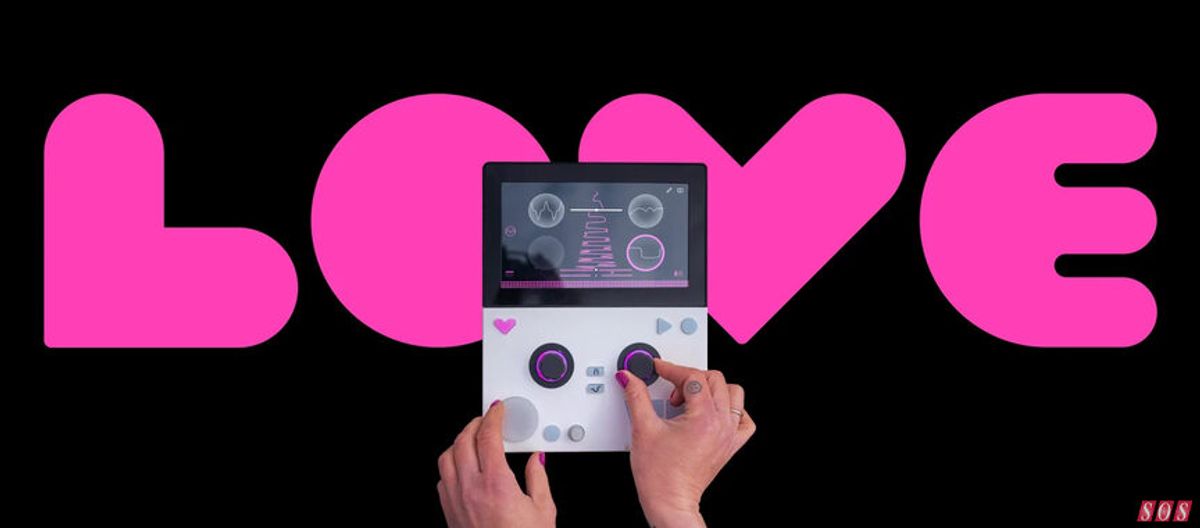
The First Love is a standalone, battery-powered FM synthesizer built around a 7-inch animated touchscreen and a set of tactile knobs and buttons. It’s the brainchild of Kári Halldórsson, a musician and developer out of Reykjavík. The instrument won the Best Innovation Award at Superbooth 2024 — before it even shipped. That’s not a small deal.
The core idea: make FM synthesis feel physical and visual rather than buried in pages of menus. You sculpt sounds directly on the screen. You see what the waveform is doing. You touch it, shape it, morph it. It’s a genuinely different experience from anything else on the market right now.
The Specs at a Glance
| Feature | Details |
|---|---|
| Synthesis Engine | 4-operator FM per timbre, custom algorithm design on screen |
| Polyphony | Polyphonic & monophonic per part |
| Multitimbral | 4 independent parts simultaneously |
| Interface | 7″ animated touchscreen + physical knobs/buttons |
| Live Looper | 4×4 loop grid |
| Sequencer | Riff sequencer + arpeggiator |
| Tuning | Microtonal scale creation |
| Connectivity | USB-C, DIN5 MIDI In/Thru, Sync In/Out, 2× Stereo Out, 4× Mono Out |
| Power | Battery option + built-in speakers |
| Effects | Reverb, delay, chorus, freezer, bit crusher, flanger |
| Price | $699 / €499 |
| Ship Date | October 2026 (limited first run) |
What the Press Release Isn’t Telling You
Here’s the thing: Love Synthesizers is a small team out of Reykjavík. This is their first major commercial production run. That matters. Early pre-order updates already flagged manufacturing and shipping delays pushing the original launch from summer into fall. It’s not a red flag, but it’s worth knowing going in.
The other open question? The software ecosystem. The “LOVE Sharing Hub” — a desktop app for organizing patches and sharing presets — is listed as “coming soon.” Patch sharing and scale libraries sound great on paper. But how deep does it go at launch? We don’t know yet. Early demo videos have also drawn mixed reactions about the sounds out of the box. The instrument’s potential is clear; whether the factory presets show it off well is another matter.
And there’s the footprint question. The First Love sits at 19 × 24 cm — a compact tabletop device, not a handheld gadget. Make sure you’ve got the desk space. If you’re building out a dedicated home studio setup, our guide to essential recording studio equipment covers how to think about surface space, signal routing, and what to prioritize first.
How It Stacks Up Against the Competition
The obvious comparison is the Yamaha DX7 lineage and modern takes on FM like the Korg Opsix ($700) and the Elektron Digitone (~$849). Here’s the honest take:
If you already own a Digitone and love its workflow, the First Love won’t replace it — the Digitone’s sequencer is deeper and its workflow is battle-tested. But if you’ve been staring at FM synths in stores, picking them up, and putting them back down because they feel like a physics exam? The First Love is the one built for you. The touchscreen approach to algorithm design is genuinely new. No other hardware synth lets you draw your FM routing visually in real time.
And at $699 — the same price as the Korg Opsix — it’s priced to compete directly with the mid-tier hardware market. That’s a smart move. To get the most out of any hardware synth, you’ll also want a solid audio interface with clean line inputs and MIDI I/O. The First Love connects via USB-C and DIN5 MIDI, so it’ll play nicely with most modern interfaces out of the box.
Should You Actually Pre-Order?
✅ Buy This If…
- You’re a bedroom producer who has always been intimidated by FM synthesis
- You want a portable, battery-powered instrument for studio and the road
- You’re building your first hardware setup and want one box that does everything
- Microtonal and experimental music is your thing — nobody else handles scale creation this intuitively
- You want to get in on a limited first production run
❌ Skip This If…
- You already own a Elektron Digitone or Yamaha Montage and are deep into FM — the learning curve won’t excite you
- You need a proven, in-hand instrument right now — it ships in October 2026
- You want a keyboard-integrated synth; the First Love is a tabletop module, not a keyed instrument
- Software ecosystem maturity is a dealbreaker for you — the sharing hub is still coming
A Few Things Worth Setting Up Alongside It
The First Love is standalone — meaning no computer required to make music. But if you plan to record it into a DAW, you’ll want a few things sorted. Good studio monitors will let you actually hear what those morphing FM textures are doing in a mix. And a quality pair of studio headphones means you can take the First Love to a cafe, plug into its headphone out, and work silently. The battery option makes that very real.
The Bottom Line
FM synthesis has needed a moment like this. The First Love doesn’t just make FM more approachable — it reinvents how you interact with it entirely. A 7-inch touchscreen, battery power, four simultaneous parts, a built-in looper, and microtonal tuning in a $699 box that fits in a backpack? That’s a compelling argument. Pre-ordering the First Love Synth right now gets you access to a limited first production run from one of the most innovative instrument makers to emerge in years — and honestly, that’s a story worth being part of from the beginning. Will it have first-run quirks? Probably. Will it change how you think about FM synthesis? Almost certainly.
Does the First Love look like a genuine game-changer, or is the $699 price tag too steep for a first-gen instrument from a new company? Drop your thoughts in the comments below.