

Finding the perfect pair of studio headphones for music production can feel like searching for a needle in a haystack. Trust me, I’ve been there. After two decades of tweaking knobs, riding faders, and battling mix translation issues, I’ve learned that your choice of monitoring headphones can make or break your productions.
You know that moment when you think your mix sounds incredible through your speakers, only to play it back on different systems and wonder if you’ve gone temporarily deaf? Yeah, that’s usually a monitoring problem. And if you’re working in an untreated room or need to mix at odd hours (hello, apartment dwellers!), quality headphones for music production become absolutely essential.
If you are specifically looking for closed-back headphones, see our picks for the best closed-back headphones under $300.
Why You Should Trust Me
I’m not just another gear reviewer throwing around fancy terminology. I’ve been engineering and producing music for over 20 years here at Studio Gear Experts. I’ve worked everything from indie rock albums to major label pop productions, and I’ve probably made every headphone mistake in the book.
My journey started in a cramped bedroom studio where my neighbors complained about late-night mixing sessions. Sound familiar? That forced me into the world of headphone mixing, and boy, did I learn some hard lessons. I’ve burned through countless pairs of cans, from budget bargains that left my mixes sounding like they were recorded underwater, to high-end models that revealed flaws I never knew existed in my work.
These days, I still reach for headphones daily. Whether I’m tracking vocals at 2 AM, checking mix translation, or diving deep into surgical EQ work, the right headphones remain indispensable tools in my arsenal.
How I Chose and Tested These Headphones
Here’s the thing about headphone reviews – most of them are garbage. Reviewers often focus on comfort or build quality while completely ignoring what matters most: how they actually perform in real-world production scenarios.
My testing process is different. Every pair of studio headphones in this guide has been through my gauntlet:
Real-World Mix Testing: I mixed complete songs using only each pair of headphones, then checked those mixes on multiple playback systems. If a mix didn’t translate well, the headphones failed the test.
Frequency Response Analysis: I used pink noise, sine wave sweeps, and reference tracks to identify frequency response quirks. Flat response isn’t everything, but you need to know where the bumps and dips are.
Comfort During Long Sessions: I wore each pair for 4-6 hour mixing sessions. If they caused fatigue or discomfort, they got dinged. Your ears can’t make good decisions when they’re physically uncomfortable.
Build Quality Assessment: I checked everything from cable durability to headband adjustment mechanisms. Studio gear gets abused, and flimsy construction is a deal-breaker.
Price-to-Performance Ratio: Great sound means nothing if it breaks your budget. I evaluated each model’s value proposition across different price tiers.
Best Overall: Beyerdynamic DT 880 Pro
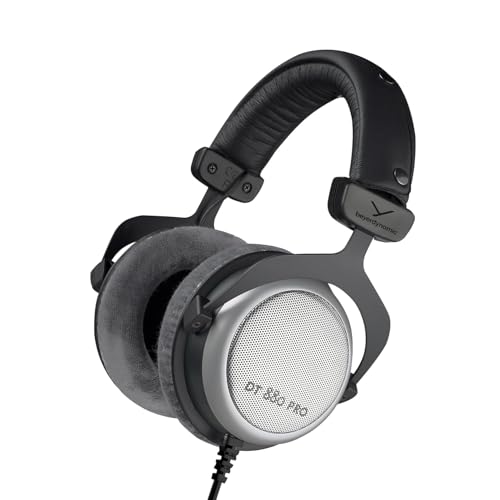
If I could only own one pair of studio headphones for music production, it would be the DT 880 Pro. These semi-open beauties hit that sweet spot between accuracy and musicality that makes mixing both enjoyable and reliable.
Why They’re Special
The DT 880 Pro delivers what I call “honest” sound reproduction. They don’t flatter your mixes with hyped bass or sparkly highs, but they don’t sound clinical either. The semi-open design provides just enough openness to prevent that claustrophobic feeling you get with fully closed headphones, while still offering decent isolation for tracking.
Key Specifications:
- Driver Type: Dynamic
- Impedance: 250 ohms
- Frequency Response: 5 Hz – 35 kHz
- Design: Semi-open back
- Price Range: $150-200
Real-World Performance
I’ve mixed dozens of projects exclusively on the DT 880 Pro, and the translation has been consistently excellent. The midrange presentation is particularly impressive – vocals sit exactly where they should, and you can make precise EQ decisions without second-guessing yourself.
The high-frequency response deserves special mention. While some engineers complain about a slight boost around 8-10 kHz, I find it actually helps with mix clarity. It’s subtle enough that it doesn’t create harshness, but present enough to help you hear important details in cymbals, vocal air, and reverb tails.
Who Should Buy Them
These are perfect for producers and engineers who need one reliable pair for everything. Whether you’re tracking, mixing, or just checking references, the DT 880 Pro handles it all with aplomb. They’re particularly excellent for rock, pop, and electronic music where you need to balance multiple layers without losing clarity.
Best for Tracking: Beyerdynamic DT 770 Pro

When you’re recording vocals, guitars, or any other source that requires headphone monitoring, isolation becomes crucial. The DT 770 Pro excels in this role like no other headphone I’ve used.
Isolation Champion
These closed-back headphones provide exceptional isolation in both directions. Musicians can’t hear the click track bleeding into their performance, and microphones won’t pick up headphone spill. This might sound basic, but I’ve heard countless recordings ruined by headphone bleed.
Technical Specs:
- Driver Type: Dynamic
- Impedance: 80 or 250 ohms
- Frequency Response: 5 Hz – 35 kHz
- Design: Closed-back
- Price Range: $130-180
The Tracking Advantage
What makes the DT 770 Pro special for tracking isn’t just the isolation – it’s the way they present the mix to performers. The slightly enhanced low-end gives musicians confidence in their performance without being overbearing. The vocal presence is clear and upfront, helping singers stay in tune and in time.
I particularly love using these for drum tracking. The enhanced bass response helps drummers feel the kick drum’s impact, while the controlled highs prevent cymbal harshness from becoming fatiguing during long sessions.
Mixing Considerations
While primarily designed for tracking, the DT 770 Pro can handle mixing duties reasonably well. However, the closed-back design can make stereo imaging feel somewhat narrow compared to open or semi-open alternatives. They’re excellent for detailed work like vocal editing or surgical EQ, but I wouldn’t recommend them as your primary mixing headphones.
Best Under $200: AKG K371

The AKG K371 represents incredible value in the under-$200 category. These closed-back headphones deliver surprisingly accurate monitoring that punches well above their price point.
Harman Curve Magic
AKG tuned the K371 to follow the Harman research target curve, which represents how most people prefer headphones to sound. This isn’t just marketing fluff – it actually works. These headphones sound natural and balanced right out of the box, with minimal adjustment needed.
Specifications:
- Driver Type: 50mm dynamic
- Impedance: 32 ohms
- Frequency Response: 5 Hz – 40 kHz
- Design: Over-ear closed-back
- Price Range: $140-170
Performance Analysis
The bass response is particularly impressive for the price point. It’s present and accurate without being bloated or overwhelming. The midrange is clean and detailed, making vocal production work surprisingly pleasant. High frequencies are smooth and extended, though not quite as detailed as more expensive options.
Where these headphones really shine is in their versatility. They work well for tracking, mixing, and casual listening. The low 32-ohm impedance means they’ll work fine with phones, tablets, and budget audio interfaces without additional amplification.
Value Proposition
At around $150, the K371 offers about 80% of the performance you’d get from headphones costing twice as much. They’re perfect for home studio owners who need quality monitoring on a budget, or as a reliable backup pair for professional facilities.
Best Budget: Audio-Technica ATH-M40x

Sometimes you need decent studio headphones but can’t justify spending hundreds of dollars. The ATH-M40x proves that budget doesn’t have to mean compromise – at least not complete compromise.
Budget Reality Check
Let’s be honest about budget headphones. They won’t compete with high-end models in terms of detail, soundstage, or build quality. But the M40x gets surprisingly close to professional performance for around $100.
Key Features:
- Driver Type: 40mm dynamic
- Impedance: 35 ohms
- Frequency Response: 15 Hz – 24 kHz
- Design: Closed-back, foldable
- Price Range: $90-110
What They Do Well
The M40x excels at providing a balanced, workable sound signature that won’t lead you astray during mixing. The bass is controlled, the mids are present, and the highs are smooth enough for extended listening sessions. They won’t reveal every nuance in your recordings, but they won’t hide major problems either.
Build quality is solid for the price point. The headband adjustment mechanism feels sturdy, and the detachable cable is a nice touch that extends their lifespan considerably.
Limitations to Consider
The M40x struggles with soundstage width and imaging precision compared to higher-end options. Complex mixes can sound somewhat congested, and stereo placement decisions become more challenging. They’re also not the most comfortable for marathon mixing sessions.
However, for beginners learning the ropes or experienced engineers needing an affordable backup pair, they deliver remarkable value.
Best for Mixing: Shure SRH1840

When mixing becomes your primary focus, you need headphones that reveal every detail without fatigue. The Shure SRH1840 delivers exactly that combination of accuracy and comfort that serious mix engineers demand.
Open-Back Advantages
The open-back design creates a spacious, natural soundstage that makes mixing decisions more intuitive. Stereo imaging is precise, and the sense of depth helps you make better reverb and delay choices. It’s like having a window into your mix rather than a porthole.
Professional Specifications:
- Driver Type: 40mm neodymium
- Impedance: 65 ohms
- Frequency Response: 5 Hz – 25 kHz
- Design: Open-back circumaural
- Price Range: $400-500
Mixing Performance
The SRH1840 provides what I consider reference-quality monitoring. The frequency response is remarkably flat, with no significant peaks or dips that would mislead your mixing decisions. Bass extension is excellent without any bloat, mids are transparent and detailed, and highs are smooth and extended.
What really impresses me is how these headphones handle complex arrangements. Individual elements remain distinct even in dense mixes, making it easier to make precise EQ and compression decisions. The transient response is particularly noteworthy – you can hear exactly how your compressor is affecting drum hits or vocal attacks.
Professional Considerations
The SRH1840 requires proper amplification to reach its full potential. While they’ll work with consumer devices, a dedicated headphone amplifier reveals their true capabilities. They’re also completely open, so they’re unsuitable for tracking or any situation requiring isolation.
At around $450, they’re a significant investment, but one that pays dividends in improved mix quality and reduced ear fatigue during long sessions.
Best High-End: Sennheiser HD 800 S

When budget isn’t a constraint and you want the absolute best studio headphones for music production, the Sennheiser HD 800 S represents the pinnacle of headphone engineering.
Flagship Performance
The HD 800 S delivers a level of detail, soundstage, and tonal accuracy that’s simply breathtaking. These headphones reveal nuances in recordings that you never knew existed – sometimes for better, sometimes for worse.
Premium Specifications:
- Driver Type: 56mm ring radiator
- Impedance: 300 ohms
- Frequency Response: 4 Hz – 51 kHz
- Design: Open-back circumaural
- Price Range: $1,600-1,800
Uncompromising Detail
The level of detail retrieval is almost uncomfortable at first. Every subtle compression artifact, every room reflection, every tiny timing inconsistency becomes clearly audible. It’s like switching from standard definition to 4K – you can’t unsee what you’ve seen.
The soundstage is enormous, creating an almost speaker-like listening experience. Stereo imaging is pinpoint accurate, and the sense of depth and space is unmatched by any other headphone I’ve used.
Professional Applications
The HD 800 S excels in mastering applications where ultimate accuracy is paramount. They’re also excellent for mix referencing, allowing you to hear exactly how your productions will translate on high-resolution playback systems.
However, their revealing nature can be overwhelming for mixing work. Every small imperfection becomes magnified, which can lead to over-processing and mix paralysis. They’re best used by experienced engineers who can handle the additional information without getting lost in the details.
Investment Considerations
At nearly $1,800, the HD 800 S is a serious professional investment. They require high-quality source material and excellent amplification to justify their price. For most home studio owners, the performance improvement over headphones costing half as much isn’t worth the additional expense.
Comparison Table: Best Studio Headphones for Music Production
| Model | Type | Impedance | Price Range | Best For | Pros | Cons |
|---|---|---|---|---|---|---|
| Beyerdynamic DT 880 Pro | Semi-open | 250Ω | $150-200 | All-around use | Balanced sound, comfortable, great translation | Requires amplification |
| Beyerdynamic DT 770 Pro | Closed | 80/250Ω | $130-180 | Tracking | Excellent isolation, enhanced bass | Narrow soundstage |
| AKG K371 | Closed | 32Ω | $140-170 | Budget mixing | Harman curve tuning, versatile | Build quality concerns |
| Audio-Technica ATH-M40x | Closed | 35Ω | $90-110 | Entry level | Great value, balanced sound | Limited detail, comfort |
| Shure SRH1840 | Open | 65Ω | $400-500 | Professional mixing | Exceptional accuracy, comfort | Requires amplification |
| Sennheiser HD 800 S | Open | 300Ω | $1,600-1,800 | Mastering/referencing | Ultimate detail, soundstage | Extremely expensive, overly revealing |
Honorable Mentions
Several other headphones for music production deserve recognition, even though they didn’t make my top picks:
Sony MDR-7506
These industry standards remain popular in professional studios worldwide. While their bright signature isn’t ideal for mixing, they’re incredibly reliable and offer excellent value for tracking applications.
Audio-Technica ATH-R70x
An underrated open-back option that offers much of the SRH1840’s performance at a lower price point. The lightweight design makes them comfortable for extended sessions.
Focal Listen Professional
These closed-back monitors provide surprisingly good mixing performance with excellent build quality. They’re worth considering if you need isolation but don’t want to sacrifice too much accuracy.
Grado SR325x
For those who prefer a more colored, musical presentation, Grado’s signature sound can be inspiring during creative sessions. Not ideal for critical mixing, but excellent for arrangement and production work.
Choosing the Right Headphones for Your Needs
Selecting the perfect studio headphones for music production depends on several factors beyond just sound quality:
Budget Considerations
Don’t overspend on headphones if your audio interface, microphones, or room treatment need attention first. A $150 pair of quality headphones will serve you better than $500 headphones connected to poor source equipment.
Usage Patterns
If you primarily track vocals and instruments, prioritize isolation and comfort. If mixing is your main focus, accuracy and soundstage become more important.
Room Acoustics
In untreated rooms, closed-back headphones might actually provide more consistent results than open-back designs that can be influenced by room reflections.
Amplification Requirements
High-impedance headphones often sound better but require dedicated amplification. Consider your current interface’s headphone output capabilities before choosing.
Conclusion: Finding Your Perfect Studio Headphones for Music Production
After testing dozens of models over two decades, I’ve learned that the best studio headphones are the ones that help you make better music consistently. While technical specifications matter, the real test is whether your mixes translate well to different playback systems.
The Beyerdynamic DT 880 Pro remains my top overall recommendation because they strike the perfect balance between accuracy, comfort, and affordability. They’ve been the backbone of countless professional productions and continue to deliver reliable results day after day.
For those just starting their production journey, the Audio-Technica ATH-M40x provides an excellent entry point without breaking the bank. More experienced engineers will appreciate the precision of the Shure SRH1840, while those with unlimited budgets can enjoy the ultimate performance of the Sennheiser HD 800 S.
Remember, even the best headphones are just tools. They won’t magically make your mixes perfect, but they will give you the information you need to make informed decisions. Spend time learning how your chosen headphones translate to different playback systems, and always check your mixes on multiple sources.
The most important advice I can give? Choose a pair you find comfortable and stick with them long enough to really learn their characteristics. Consistency in monitoring is far more valuable than constantly chasing the latest and greatest gear.