Do you need a new condenser microphone for your studio? Are you on a tight budget? If so, you may be wondering if there are any good condenser mics available for under $100. Fortunately, there are quite a few great options out there, and we’re going to take a look at some of the best ones.
In this blog post, we’ll be discussing some of the best budget-friendly condenser mics on the market. So whether you’re a beginner just starting out in the music world, or you’re a seasoned pro looking for an affordable option, read on for some great recommendations.
Our Top Picks
Best Large Diaphragm Condenser Microphone
Audio-Technica AT2020 Cardioid Condenser Studio XLR Microphone

To see the full list of our favorite condenser mics under $100, continue reading.
5 Best Condenser Microphones Under 100
Let us take a look at some of our top 5 picks.
1. Audio-Technica AT2020
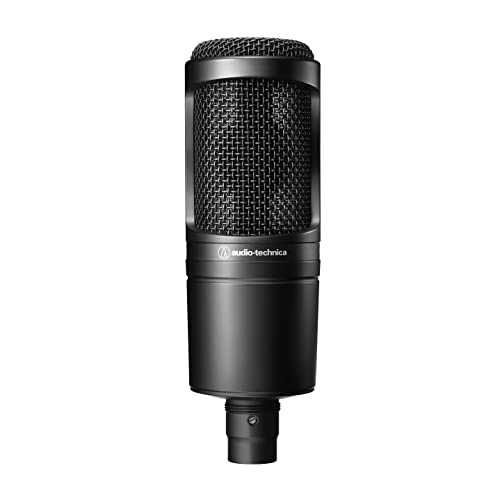
Where versatility is concerned, there are very few microphones that could match the Audio-Technica AT2020 within this price range. This is the brand behind the very first mic that I ever owned. A common theme between mine and this one is affordability.
Audio-Technica has continued to make mics that are consumer-friendly. The first thing that you will note from this is that has a professional look. It is one of those mics that we can all see fitting right into our home studios. Fortunately, the price is not much of a deterrent. It is a perfect cocktail of performance and price.
Frequency response is extended and has a superior transient response. This is an incredibly versatile microphone that makes use of its wide dynamic range to the absolute fullest. This makes it a great addition to your home studio or instances where you have a limited budget to work with. Having a versatile microphone will mean that you won’t need to get another one.
Pros
- The sound quality was impressive.
- It easy to mount.
- It is capable of capturing loud sound without distortion.
- It is very durable.
- Provides great value for money.
Cons
- It picks up more than you’d want in open environments.
- Does not do as well for low sounds.
2. MXL Mics 770

The MXL Mic 770 is a multi-purpose microphone. It can be used for capturing sounds from vocals, piano, stringed instruments and percussion. Having had the pleasure of trying it out, we can safely say that you will not be disappointed with its performance.
It has a balanced bass response with high-end clarity. In simple terms, you will find that the MXL Mics 770 has no problem capturing bass. It produces a clear output even when the sound is loud and punchy. Your input will largely match the output that you get. This is courtesy of the transformerless output feature.
There is a frequency range of 30Hz – 20KHz and a sensitivity of 15mV/Pa. The output impedance is 150 Ohms. You will require and 48 Volt phantom power source to use this mic. Most mixers or audio interfaces will have this feature, so you shouldn’t need to worry.
Pros
- It is a sturdy, well-built mic.
- It features a shock mount.
- Comes with a protective carrying case.
- Largely eliminates background noise.
- It is quite affordable.
Cons
- The shock mount could be of better quality.
- The longevity is questionable.
3. Behringer C-2

These microphones come as a pair that are designed to deliver full stereo recordings both in a studio and for live performances. You do not necessarily have to use the two mics at the same time. They can be used individually or as a pair depending on what you are recording.
Each mic has a cardioid pickup pattern that does a great job of isolating and capturing the sound source. They have a low-mass diaphragm that delivers an ultra-wide frequency response range. There are switches for low-frequency roll-off and input attenuation. Low-frequency distortions are also gotten rid of, courtesy of low-noise transformerless FET.
You also get a windscreen, a stereo mounting bar and a very strong carrying case. There is not much else that is required to get you started. Once the phantom power and the XLR cable are in place, you are good to go.
Pros
- The price that these are sold for is mindblowing.
- You get a pair of mics instead of one.
- They do a great job for instrument micing.
- They come with a carrying case.
- They have a stereo bar to mount both mics.
Cons
- Mic sensitivity is difficult to control.
4. Rode NT-USB-Mini USB

The Rode NT-USB-Mini is a USB microphone. The great thing about USB mics is that they don’t need an audio interface, so they plug directly into your computer/tablet. On the other hand, there is somewhat less punch in the sound that is recorded in comparison to what you get with an XLR mic.
With the recording quality factored in, you can say that this microphone is best suited for recording vocals. Although it is marketed as being capable of recording instruments we found that it does not do as good a job at this. The louder the instrument was the more distorted it got. As a vocal mic, however, we give it a thumbs up.
The Rode NT-USB-Mini has a solid construction, Rode has delivered a sturdy design. It feels sturdy in your palm and has the look to match that. There is a volume control toggle on the microphone for the headphone volume. The clarity of the recordings is not in doubt. You will get good-quality recordings that are also clear.
Pros
- Delivers great sound at an industry low price.
- The mic feels well-built and sturdy.
- It looks just as professional as any of the top brand ones.
- There is a stand included.
Cons
- It does not do well with loud sounds.
- Sensitivity could be better.
5. Blue Snowball iCE
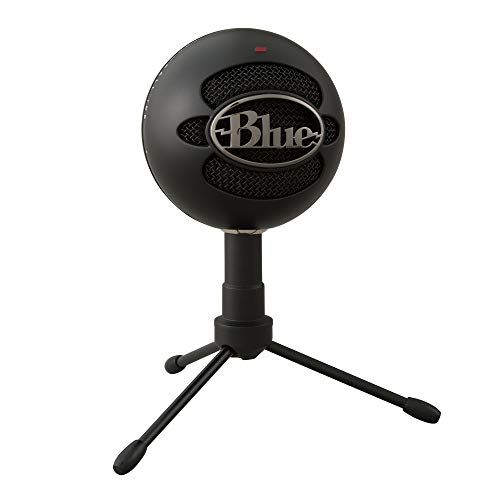
The Snowball iCE is one of those mics that is great for getting started in recording, it is by no means a professional microphone. However, what you get is a condenser mic that will capture vocals and instruments to produce great sound output.
The one thing that it does better than the one we looked at above is that they did away with the need for drivers. This is a genuine plug-and-play device. This makes it an easy microphone to take from one place to another. You’ll no longer have the burden of needing to get take an audio interface with you.
It is a cardioid condenser mic. For the best quality recording results, it is a good idea to record in close proximity to the sound source. This also means that there is less interference from other sources. The USB cable that is on the device is 6 ft long. There is a desktop mic stand included.
You can purchase it in either black or white.
Pros
- The mic capture crystal clear vocal recordings.
- It does reasonably well with instruments.
- There are no drivers required to run it.
- It is USB powered, so no phantom power is necessary.
- It is very easy to set it up.
Cons
- It picks up background noises if they are close to the source.
What To Consider When Buying A Condenser Microphone
Microphones are categorized into two main types. dynamic microphones and condenser microphones. Both microphones have different outputs. Condenser microphones have a wide frequency range and they are great at reproducing the sound at its exact speed. They are sensitive to loud sounds however, they are generally louder themselves.
When it comes to budgets (which is what we are talking about here) condenser mics are normally more expensive than dynamic mics. When you are on a budget, you will need to scout for one that gives you great quality. It is therefore vital to know what you are looking for in a good condenser microphone so that you can get the best one under 100.
Phantom Power
To power a condenser microphone, you will need a 48-volt phantom power(unless it’s a USB mic) which can easily be supplied by an audio interface, mixer, or external power supply. The switch needs to read, P48 or 48V on the channel input.
Condenser Microphone Types
Condenser microphones come in two types. Large-diaphragm microphones and small diaphragm microphones. The large-diaphragm microphones are the common and most obvious choice for studio recordings. Whether you are recording vocals or instruments, the microphone you choose to go with can make all the difference.
Small diaphragm microphones
Small diaphragm mics are best when you are looking for wide frequencies and sold response. They are the preferred choice when it comes to a concert recording, as they do a great job of recording strings and instruments.
Large-diaphragm microphones
Large-diaphragm mics are perfect when you are looking for a deeper sound. It warms up the sound of whatever it is recording. Meanwhile, small diaphragm microphones, do a fantastic job of reproducing the sound evenly, including bass.
Pop Filters
If you are looking to use a condenser microphone for vocals, then you will want to also make sure that you have a pop filter (this will add to your total cost). The reason for this is that condenser mics are super sensitive to sound, so they will pick up even the slightest breath plosive sounds. This can then cause distortion.
Best Condenser Mic Under 100 – Buyer Guide
You are looking for a condenser microphone for under 100? Some things are easier said than done whilst others are not as difficult as they seem. This is a case of the latter.
The key thing to remember when you are shopping on a budget is that you have to be focused. It is important that you know exactly what you are looking for in a condenser microphone. When they first came onto the scene, condenser microphones were always the most expensive and were not the mic to get if you were on a budget. This is because of all the intricate details that go into the design and manufacture of this beauty. Today, however, there are condenser microphones that you can find under 100, that will deliver quality sound for you.
Why do you need it?
The first thing to ask yourself, is, why do you need it? There are different reasons why condenser microphones are bought and used. And one of them is to record. Now, once again, recordings differ. You may be looking to record a live band playing in the studio, or you may want to record a musician singing. You may also want to record someone speaking or doing a voice-over for an advert. The reason you want to use the microphone will determine the quality you need in the microphone.
Durability
If you are setting up a new home studio, for example, that may be the reason why you need to get a microphone and other equipment on a budget. It, therefore, goes without saying that you do not want to be replacing it after a couple of uses. Look for microphones that are durable and will push you through. The physical build of your new condenser microphone should be able to weather a couple of storms in your studio.
Warranty
Yes, it may be on a budget, but you still want a quality piece of equipment. Therefore, look out for the product’s warranty. What is it that you will need to be aware of so that you maintain the warranty and still qualify. For example, what is covered under the warranty, what type of damage to the mic will warrant the manufacturer giving you a replacement?
Range and frequency
Check on the frequencies that the microphone can record. If you are looking to record sounds with high frequencies then the condenser microphones should be your go-to.
How does a condenser microphone work?
A typical condenser microphone has two diaphragms placed inside the capsule. These diaphragms hold a fixed charge between them, which is charged by phantom power. When th sound wave hits the diaphragm, it changes the distance between them as well as the capacitance. This then changes the voltage level and gives you an electrical output. This output on its own is not powerful enough, so it enlists the help of a microphone preamp. This signal is now powerful enough to be processed by other devices in the studio like a mixer.
How well do budget condenser microphones fair against high-end condensers?
Like any other piece of equipment, the high-end versions work better, but this does not mean that you can not get a good microphone on a budget. Soma of the options we have listed may actually shock you. They are great quality and look great too (even though it is not about the looks, this is a bonus for those who like to see things in a certain way). Some brands are well known for the quality they produce. Don’t shy away from them just because you are on a budget. Some of the best brands in the world make the most affordable condenser microphones. You just need to take the time to look for it and you will find the right fit.
Design and polar patterns
Condenser microphones are designed differently in terms of the way they look, but what you need to be more concerned about, is the polar patterns. The sensitivity of the microphone to sound. This is what makes the condenser microphone such a big deal in recording in the studio.
Can a budget microphone deal with noise?
Most budget condensers can effectively deal with background noise and feedback. It may not be able to block out all background noise, but what it does is pretty sufficient and will get you decent sound.
Recording with a condenser microphone under 100
One of the most common uses of a condenser microphone is using it to capture instruments’ sound. When doing this, it is important that you know the maximum SPL levels, especially if you are capturing sound at a high volume.
Final Thoughts
Condenser microphones are definitely a must-have piece of equipment in any modern-day studio. They are usually the first microphone any producer looks to get in their arsenal, and with good reason too. If you want to record good quality sound and sound like the pro you are, then you have to be well equipped. They are your best bet in capturing well-defined and accurate sound. So you know your audience will be thrilled by the product. Just because it is a budget condenser does not mean it has to be substandard. Making your decision on your new condenser under 100 is not much easier we hope. Happy shopping!