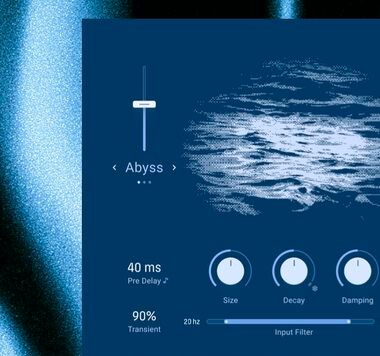
For years, producers have been patching together delays, reverbs, and modulation just to get that one sound — that deep, living, breathing space that feels like it moves. Most reverb plugins either give you a clean room or a giant hall. Very few give you something that actually evolves. That’s the gap Arturia just stepped into with the Rev Ocean reverb. And at first glance, it’s a bold, focused swing that’s hard to ignore — though there’s one thing worth knowing before you hit buy.
What Exactly Is Rev Ocean?
Arturia released Rev Ocean on June 25, 2026 — an FDN reverb built around movement rather than a single static space.
Instead of mimicking a vintage hardware unit,
it focuses on creating evolving spaces through three Macro Modes — Abyss, Tide, and Foam — that each reshape the reverb tail with different movement and diffusion characteristics.
Think of it less as a traditional reverb and more as a space that breathes.
The Specs at a Glance
| Feature | Detail |
|---|---|
| Engine | FDN (Feedback Delay Network) + Multi-stage diffusion |
| Modes | Abyss, Tide, Foam |
| Controls | Size, Decay, Brightness, Filtering, Width, Ducking, Transients, Pre-delay, Freeze |
| Mix Tools | Mix, Return, Mix Lock |
| Formats | VST / VST3 / AU / AAX |
| Platforms | Windows & Mac |
| Price | $49 / €49 |
Rev Ocean is available now for $49 as a launch price, running until July 14, 2026.
During the same window it is also included at no extra cost with FX Collection 6 Pro ($499).
Breaking Down the Three Modes
This is where Rev Ocean earns its name. Each mode does something genuinely different:
- Abyss adds layered reverse textures with pitch shifting, producing a harmonically rich evolving tail.
- Tide introduces modulated filtering for smooth, phase-like spectral movement.
- Foam is tailored for softer, swelling ambience and lighter spatial textures.
If you’ve been using a stock DAW reverb for your ambient pads or shoegaze guitars, these three modes alone represent a serious upgrade in creative range. Pair any of them with a well-dialed studio monitor setup and you’ll hear every detail of what’s happening in that tail.
What the Press Release Doesn’t Tell You
Here’s what Arturia isn’t leading with:
Rev Ocean shares its FDN engine with Arturia’s Efx AMBIENT but pairs it with finer parameter control and a more focused interface aimed at fluid tails and evolving atmospheres rather than glitch and texture work.
So if you already own Efx AMBIENT, some of this sonic territory will feel familiar. You’re not getting an entirely new engine — you’re getting a more refined, purpose-built version of it.
Also worth noting: the community reaction has been mixed.
Some users in audio forums feel fatigued by the sheer number of reverb plugins on the market and question whether Rev Ocean does something special enough to justify a spot in the toolbox.
That’s a fair challenge — and one worth addressing head-on.
How Does It Stack Up Against the Competition?
The obvious comparison is Valhalla VintageVerb — also around $50.
VintageVerb is a broader all-purpose reverb covering everything from subtle rooms to large halls. Rev Ocean focuses more on animated ambience and evolving textures that become part of the arrangement.
In plain terms: if you want a workhorse reverb that handles everything from drums to dialogue, VintageVerb is hard to beat. But if you’re a producer building cinematic, downtempo, ambient, or electronic music — Rev Ocean is specifically built for you.
If you’re still running everything through a basic free reverb in your DAW, this is the first serious upgrade worth making.
The Workflow Features That Actually Matter
Mix, Return, and Mix Lock let you balance wet/dry levels, control reverb volume, and browse presets without losing your mix position.
That last part — Mix Lock — is genuinely useful. Preset browsing without losing your levels is a small feature that saves real time in a session.
Rev Ocean also includes controls for ducking, transient shaping, pre-delay, and Freeze, allowing users to build everything from subtle ambience to long, evolving reverberant textures.
The Freeze function is worth highlighting on its own: hold a reverb tail indefinitely and let it become a pad. Instant texture, no synth required. Perfect if you’re working with a lean home studio setup.
Who Should Actually Buy This?
✅ Buy This If:
- You produce ambient, lo-fi, downtempo, cinematic, or shoegaze music
- You want reverb that moves rather than just decays
- You’re building your first serious plugin collection and want something unique for $49
- You already own studio headphones or monitors that let you actually hear spatial detail
❌ Skip This If:
- You already own Arturia’s Efx AMBIENT — the engine overlap is real
- You need a general-purpose reverb for drums, vocals, and everyday mixing duties
- You only need a subtle room sound — this plugin is built for immersive depth, not subtlety
The Verdict
The Arturia Rev Ocean reverb isn’t trying to be everything. It’s a focused, motion-first reverb that does one thing exceptionally well: it makes spaces feel alive.
Powered by pristine FDN processing, multi-stage diffusion, and deep modulation, Rev OCEAN transforms any sound into a fluid, ever-shifting sonic space.
At $49, it’s priced sharply enough that the decision shouldn’t take long — especially if your music lives in the atmospheric end of the spectrum.
Does the Arturia Rev Ocean reverb look like a must-have to you, or do you think the reverb plugin market is already too crowded? Drop your thoughts in the comments below.
🔗 Check out Arturia Rev Ocean on the official Arturia website →