New Release · November 2026
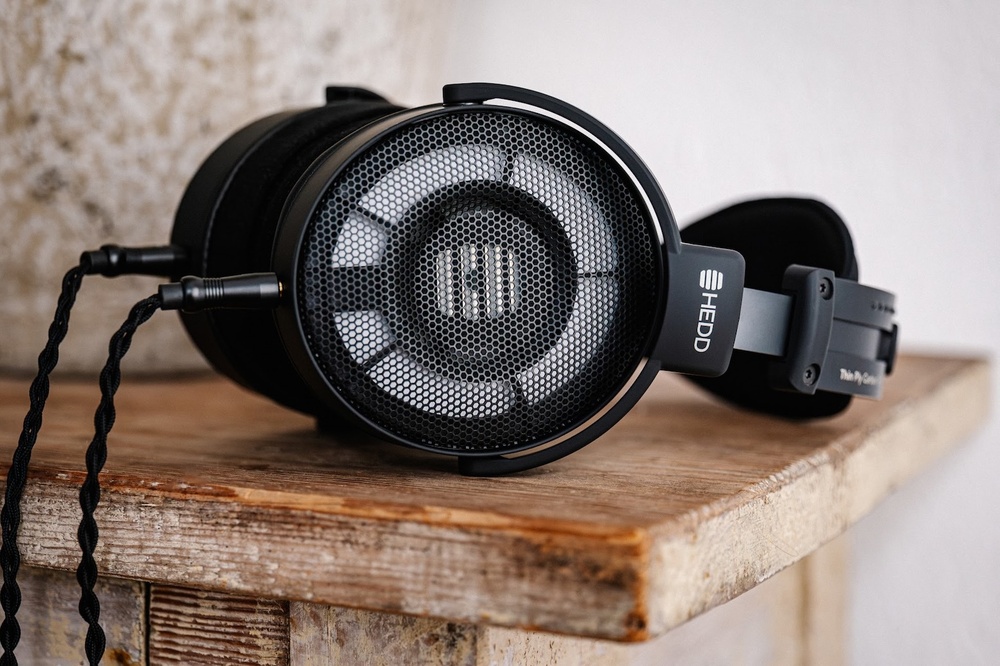
Carbon-driver technology borrowed from aerospace. Full bass output at frequencies most open-backs quietly give up on. This is HEDD’s most ambitious headphone yet — and it’s genuinely exciting.
$1,199 USD
Open-back headphones have a dirty secret. Most of them sound gorgeous in the mids and highs — and then fall apart below 60Hz, handing you an illusion of bass rather than the real thing. If you’ve been mixing on studio headphones and wondering why your low end never translates, that’s often why. HEDD Audio just announced the HEDDphone DX, a flagship open-back dynamic headphone that claims to solve this — with full output all the way down to 20Hz. That’s the kind of spec that stops you mid-scroll.
The Spec Sheet — Without the Fluff
20Hz
Bass Floor
310g
Weight
32Ω
Impedance
| Spec | HEDDphone DX |
|---|---|
| Driver | 50mm Thin-Ply Carbon Diaphragm (TPCD) |
| Frequency Response | 5Hz – 40kHz |
| Impedance | 32Ω |
| Sensitivity | 100 dB/mW |
| Weight | 310g (down 40g from D1) |
| Cable | 2.2m 8-strand OCC braided, 4.4mm balanced + 6.3mm adapter |
| Connection | Dual 3.5mm TS jacks (aftermarket-cable friendly) |
| Price | $1,199 / £999 / €1,199 |
| Availability | Pre-orders open Nov 24, 2026 — shipping late November |
What’s Actually New (And What HEDD Isn’t Telling You)
The headline is the carbon driver. HEDD developed the Thin-Ply Carbon Diaphragm with Composite Sound of Sweden — yes, the people who make racing sails. Ultra-thin carbon layers are shaped and aligned to control movement and reduce resonance without adding any damping material. HEDD claims the diaphragm stays clean all the way up to 24kHz, which is a genuinely impressive engineering target.
“No frequency response graph, no distortion figures, no independent measurements yet — the 20Hz claim is HEDD’s own.”
What the press release leaves out
Here’s the insider note: HEDD talks a lot about the 20Hz floor, but hasn’t released any frequency response curves or THD figures to back it up. For a $1,199 headphone, that’s a gap reviewers will close quickly. The claim is plausible — open-back dynamics can extend deep with the right driver — but we’re still taking it on faith until measurements land. Watch this space.
The other addition that matters day-to-day: a redesigned suspension headband built with Capra Audio. It uses an elastic neoprene band to distribute clamping force, which should make marathon studio sessions a lot more comfortable. At 310g, it’s also 40g lighter than the D1 — meaningful if you’re wearing these for a full tracking day.
How It Stacks Up Against the Competition
If you’re already using a Sennheiser HD 800 S ($1,799), the DX won’t dramatically change your life — though the carbon driver’s bass extension story is different. If you’re running a Beyerdynamic DT 1990 Pro MKII or a Neumann NDH 30 in the $650–700 range, this is a meaningful jump: a genuinely different driver technology, a step up in build quality, and a more serious included cable. For anyone still mixing on entry-level studio cans, the DX is the kind of upgrade that changes what you hear in your tracks.
🎧 D1 owner? A $99 headband upgrade kit ships December 7 — same neoprene suspension design, retrofitted to your existing pair. A refreshed D1 with the new headband arrives January 21, 2027 at $899.
The 32Ω impedance is also worth noting. At that rating, the DX will play nicely with a quality audio interface without needing a dedicated headphone amplifier — though one will help it sing. If you’ve been holding off on a serious headphone upgrade because your interface couldn’t drive high-impedance cans, the DX removes that obstacle.
Who Should Actually Buy This?
✅ Buy This If…
- You’re a producer or mixer who needs studio-grade monitoring at home
- Your current open-backs feel thin or weak in the sub-bass
- You’ve outgrown the DT 1990 or NDH 30 tier
- You want Berlin-assembled build quality with every part replaceable
- You need a low-impedance can that works without a dedicated amp
⛔ Skip This If…
- You already own a Sennheiser HD 800 S or similar flagship
- You’re a D1 owner — just grab the $99 headband kit
- You need a closed-back for tracking in noisy environments
- You need measured data before you commit $1,199
- Your budget is under $900 — the refreshed D1 arrives in January
The Verdict
The HEDD HEDDphone DX is the most compelling open-back dynamic headphone announcement of 2026. The carbon diaphragm technology is genuinely novel, the low-impedance design makes it more usable across more setups, and HEDD’s reputation for studio-honest sound gives the 20Hz claim some real credibility. Yes, we need independent measurements. Yes, $1,199 is a serious ask. But if you’re a recording engineer or serious producer who’s been waiting for a dynamic driver to match the precision of HEDD’s planar and AMT headphones — this is exactly that moment. Whether you’re tracking a mix in your home studio setup or making critical listening decisions, the HEDDphone DX looks like the headphone the enthusiast community has been waiting for.
Ready to hear for yourself?
Check out the HEDDphone DX on the official HEDD Audio product page.
Does the HEDDphone DX look like a genuine leap forward to you, or is $1,199 too steep before independent measurements land? Drop your take in the comments below — and if you’re shopping for your first serious pair of studio cans, our guide to the best studio headphones is a great place to start.